They eventually went into practice together, but Nancy Rubin was not the type to ride her father’s white coattails. The Carmel Valley-based oncologist distinguished herself well before his remarkable career came to bear on her own.
In fact, both Rubin parents were surprised when their oldest daughter, then apsych major at UC San Diego, decided to add chemistry to her course load.
“They never pushed us one way or another,” the 56-year-old Rubin said of her mother Suellen — then a psychologist and professor at Cabrillo College — and her late father, Jerry Rubin, who was among the first clinicians in Monterey County to treat HIV/AIDS patients. He also successfully campaigned with former Congressman Leon Panetta to include hospice in Medicare benefits, and inspired his daughter’s eventual specialization.
Children’s book
She earned special recognition at her five-year high school reunion, where she had already won the superlative for Most Unusual Job. She’d taken a year of after graduating from UCSD to study for medical school exams, taking odd jobs like lifeguarding and dressing up as a rabbit named Rada — the mascot for a dental practice — who hopped around teaching elementary school kids how to brush their teeth.
But the former standout softball player, cheerleader, competitive diver, and valedictorian of the Class of 1988 at Carmel High was also an aspiring physician. At the next reunion, she can add children’s book author to that list.
Published in 2021 “Mommies Are Never Gone” expresses a notion of the soul that Rubin has shared with many patients and families over the years. Illustrated by local artsistPaul Richmond, the story encourages grieving children to consider that the beautiful things they see are signs that a parent is still “present” in their lives.
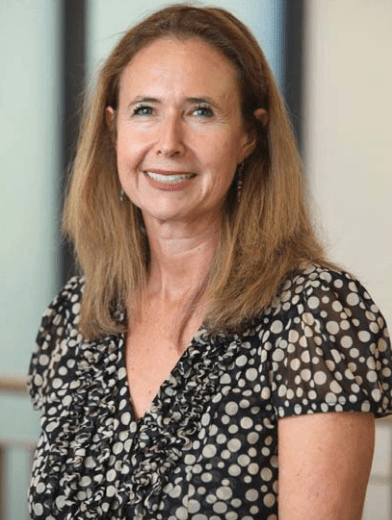
PHOTO/PACIFIC CANCER CARE
Nancy Rubin, a senior clinician with Pacific Cancer Care,
makes time in her schedule for meaningful artistic pursuits.
From a hummingbird in the window, to a rainbow on the horizon, the evidence is everywhere that “after we’re gone, we’re still here,” Rubin explained.
Her first experience of nearly losing her father — she was studying psychology at UCSD when he had a heart attack — is what pushed her “to take the harder path” of specializing in cancer treatment, Rubin said. After graduating from UCSD, Rubin enrolled in the Western University of Health Sciences in Pomona, specifically the college of osteopathic medicine.
Osteopathy can be described as a holistic approach to conventional medicine, and Rubin’s interest in treating the whole person — mind, body and spirit — was inspired by her parents. For years her mother, the psychologist, had led cancer support groups, while her husband inspired everyone with his sheer capacity for caring.
“He would see 30 to 35 patients in the time it took me to see 18 to 23 patients. He was a master of the art of being in a room for a short amount of time, and nonetheless having an impact,” Rubin said.
The whole person
By her own merits, Rubin earned numerous research and academic accolades from Western U. In the mid-1990s, she briefly returned to the Peninsula to intern for Dr. Geraldine Taplin who, assisted by specialists like Rubin’s father, had established the first HIV/AIDS outpatient clinic in Monterey County.
By the time Rubin applied for a fellowship at the University of Southern California, her experience belied her years. She’d continued to specialize in HIV treatment during residency at Oakland’s Highland General Hospital, which made her the standout candidate for the only remaining spot in the cancer center’s hematology program.
Unbeknownst to Rubin, the head of the Highland residency program had a friend in Dr. Sandy Levine, an expert in lymphoma and AIDS-related malignancies at USC, whom he told to keep an eye out for Rubin.
“Sandy was an amazing physician to learn from, so caring for the whole person. The way I practice is very similar to her,” Rubin said.
Concluding that fellowship in 2003, she received two invitations: Return to Highland and lead their oncology department — a responsibility the 33-year-old Rubin felt nowhere near ready to assume. Or, she could join her father and oncologist Thomas Bradley in practice at Cancer Associates of the Monterey Peninsula.
“It was a seamless transition. Because he was my dad, I wasn’t too intimidated to ask questions, which just accelerated my learning curve,” she said.
In 2008, their practice merged with two other local specialists to become Pacific Cancer Care. Rubin also makes rounds at Community Hospital, and focuses primarily on breast and OB-GYN cancer patients. Many doctors find it easier to treat the patients they’ve known the longest, but the same can’t necessarily be said for oncologists, even for someone so invested in the “whole person” approach to care.
“Because of how often we see them and their families, I think oncologists do get closer to our patients, even in a very short amount of time,” she said. “It’s very hard not to take your work home with you.”
To cope, she recommends aspiring doctors find a creative respite, just as she’s found hers. She only picked up guitar a few years ago and enjoys singing with her partner of five years, Craig. She hikes often at Garland Park with old friends from CHS, and she and her daughter make a point of trekking Big Sur at least once per month. Sienna, 18, a talented animator and Carmel.